




That shelf that came down at 2am? Nine times out of ten, it wasn’t the wall. It was the bracket.
People spend a lot of time picking the right shelving material but almost no time thinking about what holds it up. That’s backwards. The bracket decides whether the shelf stays put for ten years or collapses under a stack of books and a cast iron pan. Getting this right isn’t complicated, but it does require knowing what to actually look for and what to skip.
At Evolf , we believe the bracket is just as important as the shelf itself. Choosing the right support system ensures your shelving remains safe, stable, and reliable for years to come.
What Makes a Shelf Bracket Worth Buying
A good bracket does three things: it transfers load to the wall cleanly, it sits flush so the shelf doesn’t rock, and it doesn’t corrode or bend when the weight adds up over time.
Most of the cheaper options on the market fail the third test within a year. The finish chips, the metal flexes, and suddenly that bracket that “held fine for months” starts pulling away from the wall. If you’re installing shelves in a kitchen, bathroom, or garage places with humidity and temperature shifts material quality matters more than price.
Steel brackets with a powder coat finish hold up better than painted zinc or raw iron. The coating isn’t just cosmetic. It’s what keeps oxidation from working into the joints where the bracket meets the wall anchor.
The Size Problem Nobody Talks About
Here’s something most buying guides won’t tell you: bracket length should match shelf depth, not exceed it. If your shelf is 10 inches deep, a 10-inch bracket is right. Go shorter and the shelf tips forward under load. Go significantly longer and you’ve wasted money and created a trip hazard.
The vertical arm length matters too. Longer vertical arm means more wall anchoring points, which means better weight distribution. For floating shelves or shelves carrying anything over 20 lbs per linear foot, that vertical arm length is the most important measurement on the spec sheet.
Pick the wrong size and even a well-drilled installation will eventually fail. The physics don’t care how good your drill technique is.
When You Actually Need Heavy Shelf Brackets
Standard brackets handle everyday loads fine. Decorative items, books, kitchen jars no issue. But there’s a category of shelf use where standard just doesn’t cut it.
Workshop shelves holding power tools. Garage storage with fluid containers or spare parts. Kitchen shelves with cast iron, glass jars, or small appliances. These are the setups where you want heavy shelf brackets rated for real weight, not marketing weight.
I’ve seen setups where someone installed lightweight decorative brackets on a garage shelf and loaded it with tool boxes. The shelf held for about three months. After that, the bracket mounting holes started to oval out under the stress, and the whole thing came down mid-reach. The tools survived. The wall did not.
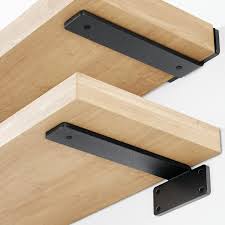
Heavy-duty brackets typically feature thicker gauge steel, wider gussets (that diagonal reinforcement piece between the two arms), and deeper mounting plates. The gusset is the part that actually handles shear force when the shelf bends under load. Without it, or with a thin one, the bracket rotates slowly over time. You won’t notice until the shelf is already leaning.
Matching Brackets to Wall Type
This is where a lot of installations go wrong. The bracket is fine. The anchor isn’t.
Drywall into stud: use wood screws, 2.5 inches minimum, and make sure you’re actually hitting the stud. If you’re not sure, get a stud finder. Drywall anchors alone won’t hold a loaded shelf long term.
Brick or concrete: you need masonry anchors or wedge anchors, and a hammer drill. Standard drill bits won’t get through properly and the anchors won’t seat correctly. A loose masonry anchor under a loaded shelf is a serious problem.
For shelf brackets going into tile, pre-drilling matters more than almost anything else. Tile cracks before it gives way, and a cracked tile behind a bracket means reinstalling the whole section.
Load Rating: What the Numbers Actually Mean
Manufacturers list load ratings per bracket, not per shelf. That distinction matters a lot.
If a bracket is rated at 75 lbs and you’re using two brackets to support a shelf, your practical load limit is 150 lbs across the span, not 75. But here’s the thing that rating assumes proper installation into structural anchoring points. An underloaded bracket in a bad anchor fails faster than an overloaded bracket in a solid stud.
Always build in a safety margin. If you think the shelf will hold 80 lbs, spec for 120. Load creeps are real. Shelves that start with a few items end up packed six months later.
Fixed vs. Adjustable Brackets
Fixed brackets are stronger. Full stop. The weld or press joint has no moving parts to wear, so load transfers directly and cleanly.
Adjustable brackets (the kind that slot into wall-mounted tracks) are more flexible for spaces that change, like pantries or closets where shelf height needs shifting. They’re also easier to install once the track is up. But they’re not the right call for heavy, permanent loads. The slotted connection introduces a small amount of movement that, under repeated stress, can loosen the shelf over time.
If the shelf is permanent and the load is significant, go fixed. If you’re setting up a pantry where you’ll reorganize twice a year, adjustable track systems make sense.
Getting the Spacing Right
Brackets too far apart means the shelf sags in the middle. This is one of the most common mistakes and one of the easiest to fix with a bit of planning.
For standard 3/4-inch plywood or MDF shelving:
- Light loads (under 20 lbs per linear foot): space brackets every 36 inches
- Medium loads (20-40 lbs per linear foot): space brackets every 24 inches
- Heavy loads (over 40 lbs per linear foot): space brackets every 16 inches
If you’re using thinner shelving material or longer spans, tighten those spacings. Sagging puts stress on the brackets at the ends, not evenly across all of them, which defeats the whole point of using multiple brackets.
The Right Bracket for the Right Job
Shelf brackets aren’t complicated. But picking one without thinking about the actual load, the wall material, and the shelf depth is how you end up with a failed installation and a damaged wall. Spend five minutes matching the bracket to the use case and the installation holds for years.
For standard shelving needs, a good quality steel bracket with proper sizing covers most situations. For anything carrying real weight, purpose-built heavy-duty options are worth the extra cost upfront. A bracket failure doesn’t just ruin the shelf; it ruins the wall, the floor, and whatever was sitting on it.