

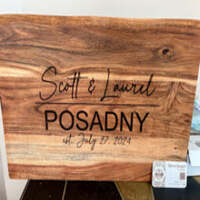
Cutting boards are among the indispensable utensils in the kitchen for both food processing and serving. The personalized wood products have become the customer’s first choice lately because of both their beauty and practical usage. Laser engraving and personalization make it possible for cutting boards to be tailored in terms of design, branding, and specific use without compromising their strength.
This article points out the various aspects of laser engraved cutting boards and customized cutting boards, ranging from features, materials, and production methods to applications and maintenance. The presented information is in line with the practices of woodworking and engraving that are usually employed by the likes of professional woodcraft manufacturers like Victor Wood Forge.
Personalized Wood Products in Utility-Based Design
Wood products meant for the kitchen must be tough, stable, and hygienic. The design of such products learns the aspects of design elements that are well regulated and yet, the performance is not affected.
Laser Engraved Cutting Boards
Laser engraved cutting boards are made with the help of high-tech laser machines which carve letters or images right onto the wooden surface. The engraving method is free from using inks, chemicals, or any sort of surface treatment.
Some of the benefits are:
• Residential kitchens
• Hospitality and catering environments
• Retail and eCommerce product lines
• Event and corporate gifting
Customization allows uniform product categories to be adapted for multiple use cases.
Laser Engraved Cutting Boards
Laser engraved cutting boards are produced using precision laser systems that etch text or graphics directly into the wood surface. The engraving process does not involve inks, chemicals, or surface coatings.
Advantages include:
• Permanent markings
• High engraving accuracy
• Consistent depth control
• Minimal surface disruption
Laser engraving is compatible with hardwood species commonly used in cutting board production.
Pro Tip: Hardwoods with tight grain patterns produce more consistent engraving results.
Material Selection and Wood Types
Choosing materials has a significant impact on the performance of the cutting board alongside the quality of engraving. Wood from hardwood trees is the first choice because of its strong points such as resistance to wear and moisture.
Common hardwood options:
• Maple
• Walnut
• Cherry
Grain orientation and board thickness contribute to resistance against warping and cracking. Proper wood drying and preparation are required prior to engraving.
One production consideration is uniform density across the engraving area.
Customized Cutting Boards
Customized cutting boards are altered according to precise design, branding, or size specifications. Customization can consist of personal names, dates, logos, or regular text.
Customized Cutting Boards for Controlled Use Cases
Customized cutting boards are used for:
• Event-based gifting
• Commercial branding
• Hospitality presentation
• Product differentiation
Example: A commercial kitchen may use customized cutting boards engraved with brand identifiers for service or resale.
Customization is applied without altering food-contact safety standards.
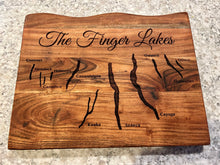
Engraving Design Standards
Engraving layouts must prioritize clarity and durability. Excessive detail may reduce legibility or engraving consistency.
Recommended standards include:
• Limited text length
• Vector-based graphics
• Balanced spacing
Example: A rectangular board engraved with a centered business name and year of establishment.
Pro Tip: High-contrast wood species improve engraving visibility.
Manufacturing and Finishing Processes
The technical parts of production are sanding, edge treatment, engraving, oil application and inspection. Protection of the surface with mineral oils that are safe for food is the most common practice.
Finishing processes must preserve engraving depth and readability. Quality control ensures surface smoothness and uniform thickness.
Manufacturing standards similar to Victor Wood Forge emphasize precision and material consistency.
Maintenance Requirements
Laser engraving does not require maintenance. Wood surfaces require routine care to maintain condition.
Recommended practices:
• Hand washing only
• Immediate drying
• Periodic oil treatment
Pro Tip: Monthly oil application supports surface stability.
Improper maintenance may reduce usable lifespan.
Functional and Decorative Integration
Laser engraved and customized cutting boards may be used for food preparation, serving, or display. Engraved designs remain visible through extended use cycles.
Boards may be stored flat, vertically, or displayed without functional limitation.
Market Relevance
Customized wood products maintain consistent demand due to usability and personalization capability. Cutting boards represent a stable product category across residential and commercial markets.
Laser engraving supports scalable production while enabling individual customization.
Conclusion
Laser engraved cutting boards and custom cutting boards are combined to make up a durable, unique and usable kitchen solution. With the help of controlled engraving, selection of hard woods and standard finishing processes, these products are made to meet the needs of both the individual and the business.
Following professional woodworking practices similar to those used by Victor Wood Forge, customized cutting boards maintain long-term relevance due to material durability, functional adaptability, and production consistency.